THE AFTERGAZE
On the Persistence of Images
I wasn’t looking for another image. I was looking for another destiny for images.
Everything felt extraordinary in the darkroom. There, images seemed more alive.
Perhaps that is why, every time I made a photographic print, I felt a profound sense of disappointment—the feeling that something was always missing.
Through painting, I began searching for what photography could not offer: the absence of visibility, the liquid epiphany of images slowly emerging in the developing tray, and the suspended time between releasing the shutter and seeing the negative for the first time. A time capable of nourishing the imagination and a dynamic memory in constant transformation. Through painting, images gradually become detached from the contexts that once defined them. They re-emerge in new forms, and it is precisely then that they begin to live.
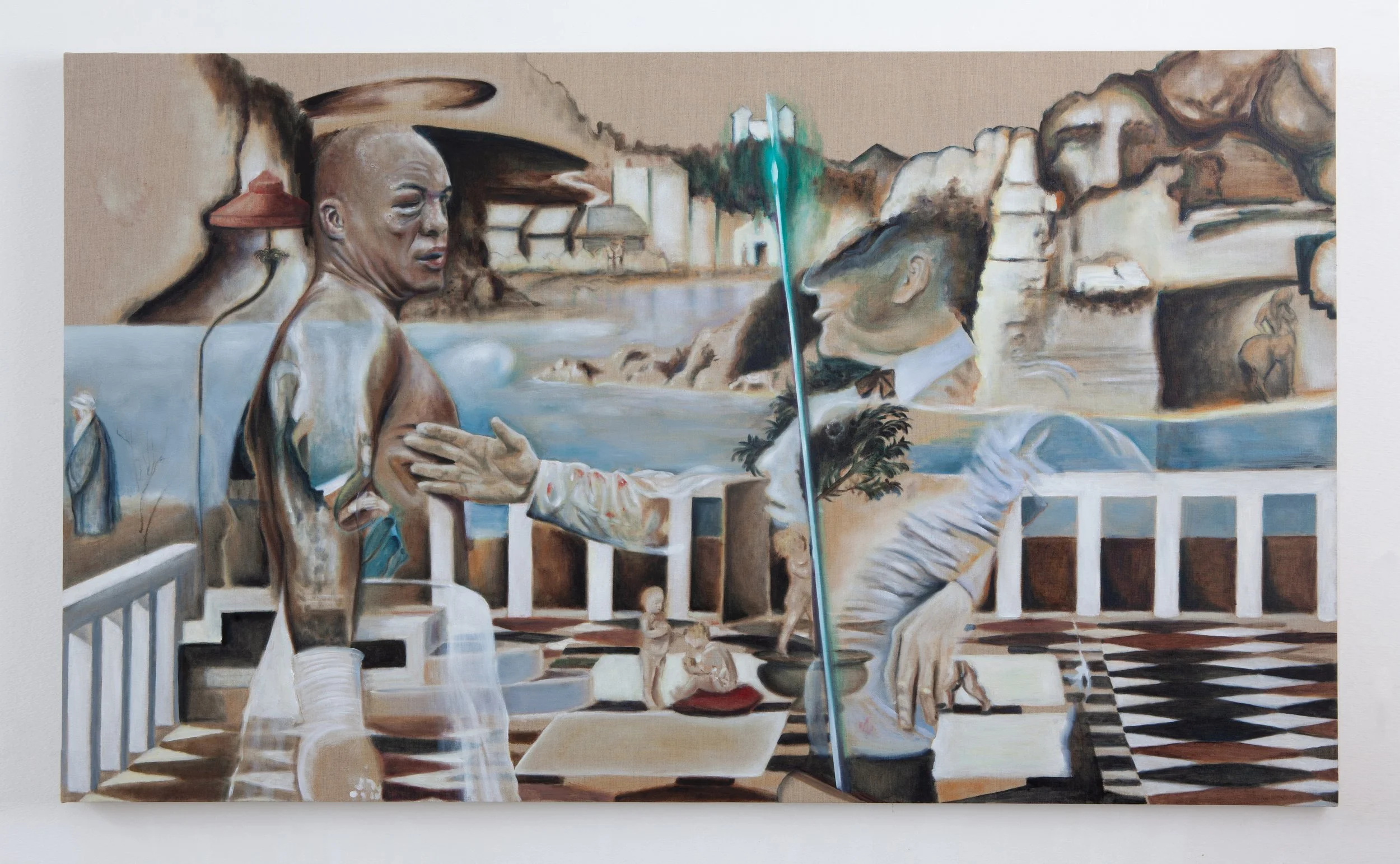
It is an Act of Hospitality
I soon realized that painting could allow visual elements that had never met to merge into one another. Film stills, self-portraits, found photographs, reproductions of Old Master paintings and, at times, AI-generated images naturally and convincingly coexist. The hand continues a process begun by memories, photographs, encounters, archives, and algorithms. Each fragment relinquishes its autonomy to become an inseparable part of a more complex image.
It is Opacity
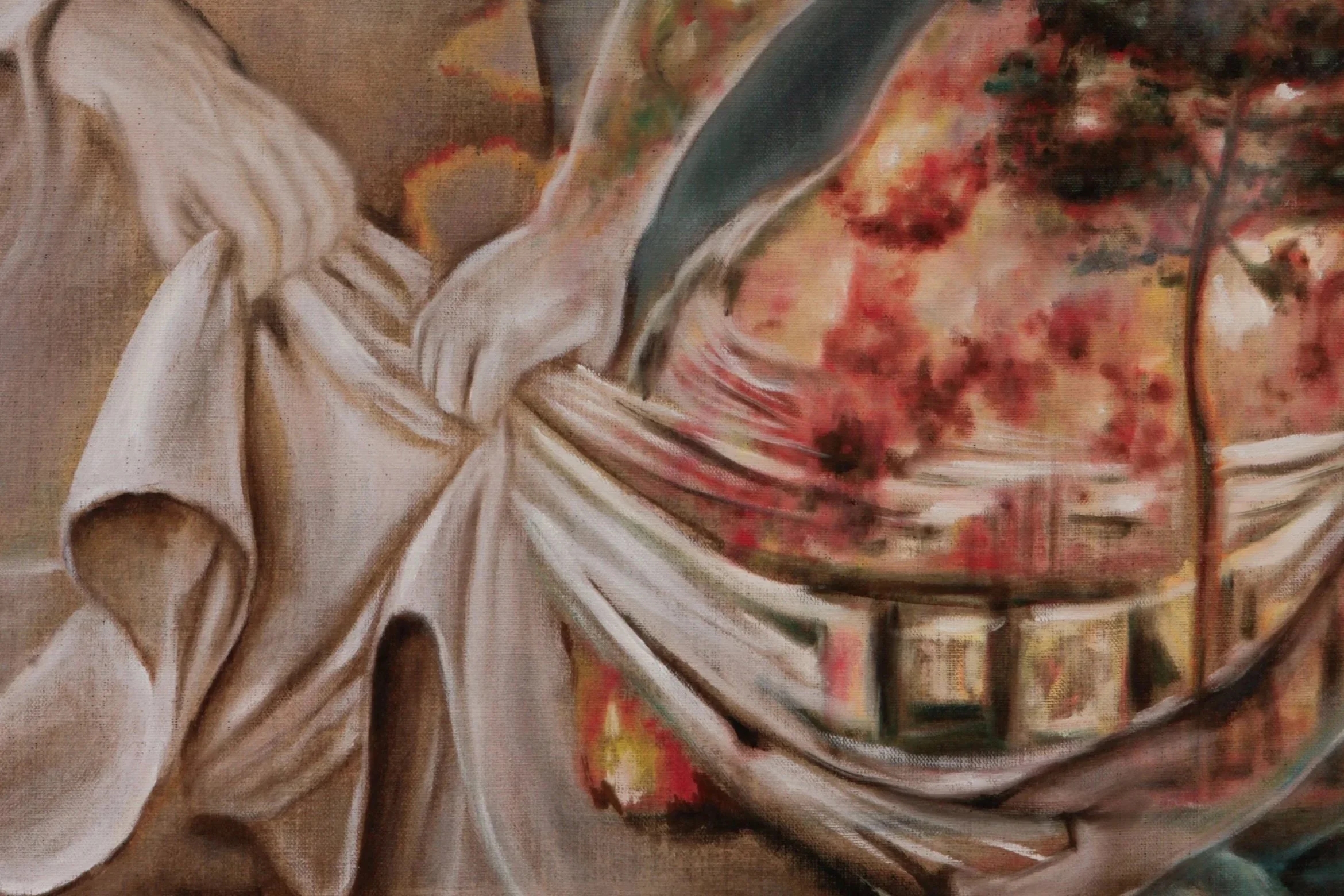
Throughout this process of accumulation, areas emerge within the painting that resist interpretation: opaque zones. Rather than asking to be understood, they simply ask to be traversed. They are spaces where images still in formation, uncertain spatial relationships, and open meanings coexist. Here the painting interrupts its informational chain and expands the time of viewing into a duration with no predetermined end.
It is a Politics of Looking
Today, images pass before our eyes at such speed that they scarcely have time to settle into memory. Painting moves in the opposite direction. It slows down. It interrupts the flow. It asks the viewer to remain long enough for an image to continue transforming. This suspension is not only a matter of time, but of relationship. The moment an image no longer needs to inform, persuade, or be immediately recognizable, it can establish an emotional, open, and non-functional relationship with the viewer. Within this space, faculties that the contemporary information economy tends to compress can be reactivated: contemplation, free association, involuntary memory, imagination, and the ability to remain within uncertainty. For me, painting is also a way of defending this possibility of relating to images.
It is Flow
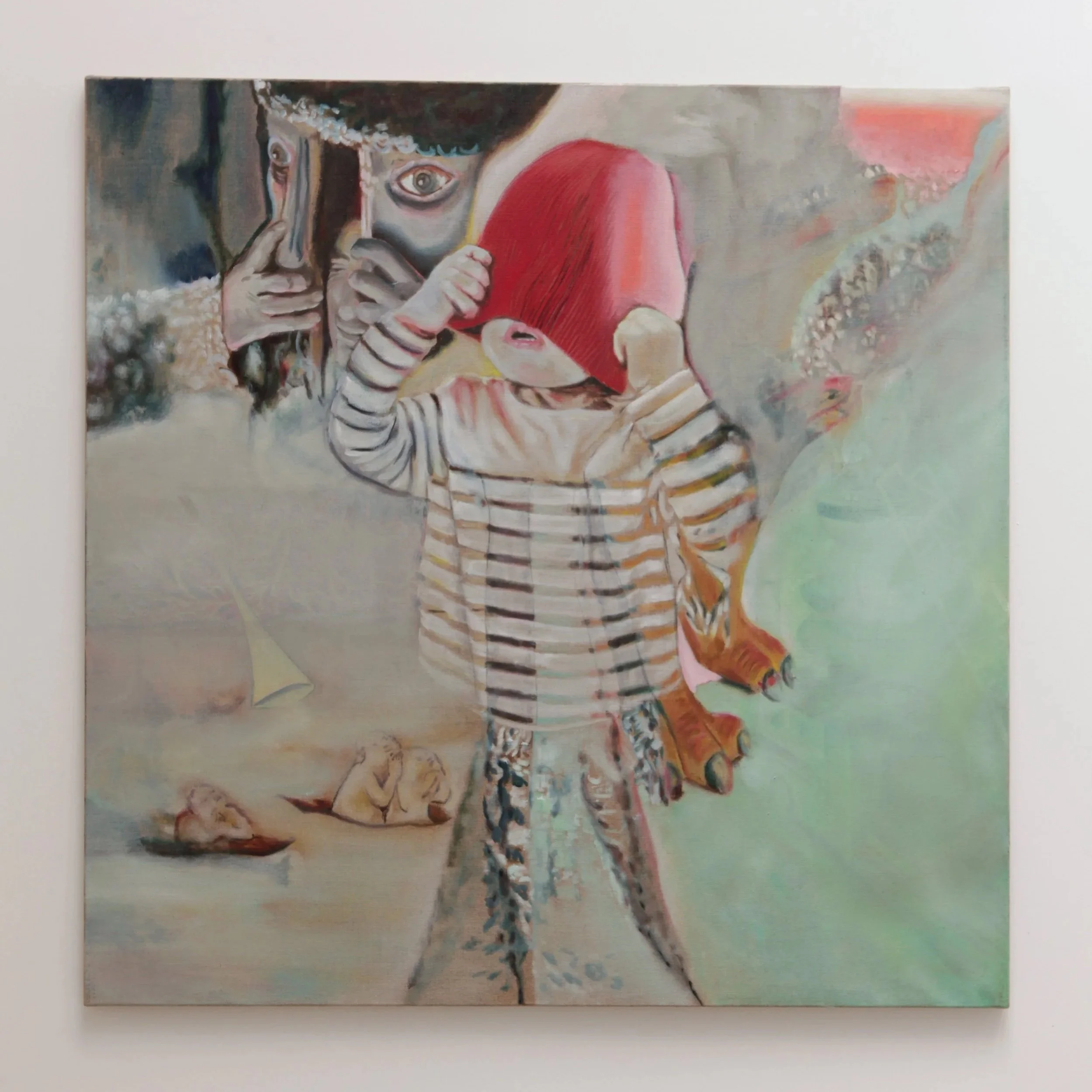
What once seemed still begins to move again. Images emerge before I am even able to recognize them. While painting, I often have the feeling that an image—or a form, or even a colour—is already present within the canvas, and that my task is not to invent it but to reveal it, slowly bringing it back into the light. In the end, through a circular movement, the painting reveals a subtle relationship—already inscribed within its surface—between the original images and the intuition that first made their encounter possible.
It is an Act of Care
In The Aftergaze, everything is biographical and personal, yet at the same time phantasmagorical and impersonal.
Everything begins with the observation of everyday life and the gathering of fragments of reality, often connected to my own experience. But the moment they enter the painting, they no longer belong to me.
Their continuous layering generates an unstable pictorial matter: accidental configurations from which each painting slowly takes shape.
A painting is complete when I finally feel that I have taken care of that chaos.
Pietro Catarinella